
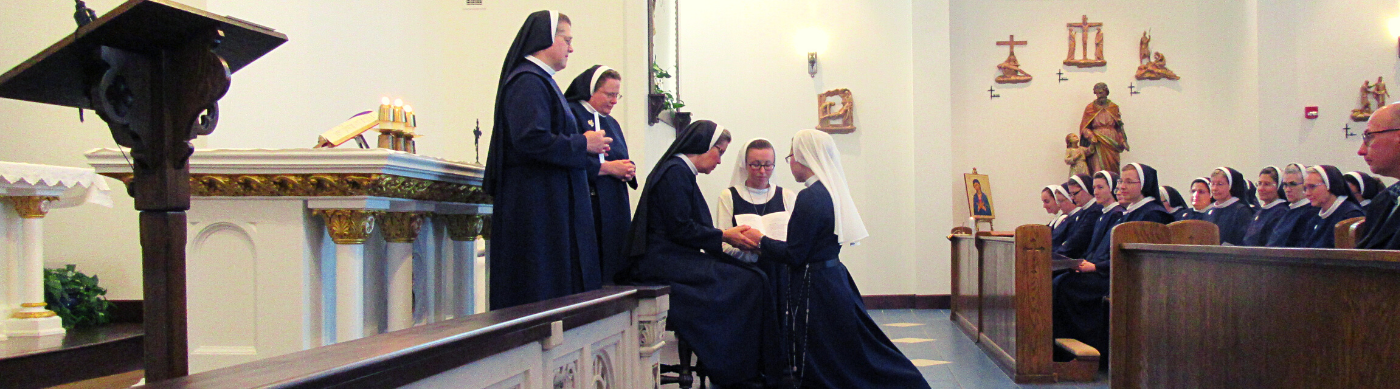
Our Vowed Life
"The vows are a triple expression of a single 'yes'."
Essential Elements, 14
What is a Religious vow?
A vow is a solemn promise made to God. The object of the vow must be good and achievable for the vow to be valid. The person making the vow must understand the commitment of the vow and freely choose to bind oneself to it. The religious binds herself to live the evangelical counsels according to the Constitutions of her Institute.
We can learn what is meant by “evangelical counsels” by looking at the meaning of the words. “Evangelical” means from the Gospel. “Counsel” means recommendation, not a command. The evangelical counsels are recommendations Jesus gives in the Gospels to those who wish to follow Him by a narrower path and with undivided love. They are not required to get to Heaven, but those who are called are advised to say yes.
A Sister seeks to live the Gospel in a radical way and to bind herself more closely to Christ. Each of the counsels are firmly rooted in the life and teaching of Christ. In the Gospel we find Him inviting (not commanding) those who are called (not everyone) to embrace the life of consecrated chastity (Matthew 19:12), evangelical poverty (Mark 10:17- 30), and wholehearted obedience (John 8:29, Hebrews 10:7, Phil 2:8).
Chastity
Lumen Gentium, the Vatican II document on the Church, states that chastity for the sake of the kingdom of heaven “is an exceptional gift of grace which uniquely frees the human heart for a more fervent love of God and of all mankind" (#42). A religious is a Bride of Christ. She is called to give herself, her heart, her body, her whole being, to Christ as all His.
Through her vow of chastity and flowing forth from her bridal relationship with Christ, a religious becomes a spiritual mother by nourishing the life of God’s children through her prayers, sacrifices, and total gift of self to the Lord. Every woman is created to be a mother and the essence of religious life does not deny or contradict this. Even though her motherhood is spiritual, this is not to say that it is not real.
A religious cannot presume to live a life of consecrated chastity by her own power. It is only through the grace of God that she can live out her bridal relationship with Christ by answering his call to a total gift of self, persevering in prayer, showing charity to all God’s children, and practicing self-denial in order to continually respond to this exceptional gift of grace.

Poverty
Taking a vow of poverty does not denote destitution, which can be oppressive. Properly understood, poverty is freeing! By her vow of poverty, a religious seeks to remove from her life all of those things and possessions that distract her from heavenly concerns. She strives to use necessary items with a sense of detachment so that her attachment may be to God alone and her concern may be to serve others with the same charity with which God cares for her.
Ultimately, a religious professes the evangelical counsel of poverty in order to better imitate Christ. Renunciation of possessions, however few or great, was a fundamental requirement for those called to follow Christ by totally giving of themselves. Evangelical poverty bears witness to the truth that material possessions are not a lasting treasure and that this life is a preparation for eternal life where each person’s only Treasure, only Desire, will be God Himself. By faithfully living religious poverty, that future reality can be a present reality as well.
Obedience
Obedience is the essence of the Christian life and even more radically of Consecrated Life because it allows one to imitate Christ more closely. Obedience is very freeing and when it is lived out joyfully, generously, and promptly, it leads to profound holiness. In vowing obedience, a religious is given a clear-cut guide to knowing God’s will, for it is revealed through the directives of one’s religious superiors. In addition, a Sister strives to recognize all the circumstances and events of life, from the mundane to the most sublime, as a gift from her Providential Father.
Jesus refers to obedience as a mark of love: "If you love me, obey...” When one loves whole-heartedly one gives oneself entirely: body, soul, intellect and will. By vowing obedience, a religious gives back to God the gifts that make man the "crown of creation," and those gifts become a sacrifice pleasing to the Lord when they are lovingly placed at His service.
Consecration
Consecration means to set apart, to make holy; this is the essence of Religious life. The Gospel provides numerous examples of the call to follow Christ by a narrower path and with an undivided heart. The narrative of the rich young man records how Jesus looked at him with love and then declared, “You are lacking one thing; go sell what you have...and come follow me" (Mk 10:21). St. John Paul II commented on the passage in one of his general audiences saying, "Jesus' divine and human love…is repeated in every call to total self-giving in the consecrated life" (October 12, 1994). This call from Jesus is a call out of love for a response of love, and this love is transforming - it sets one apart and it makes one holy.
As the document Essential Elements eloquently states, “Consecration is a divine action. God calls a person whom He sets apart for particular dedication to Himself. At the same time, He offers the grace to respond so that consecration is expressed on the human side by a profound and free self-surrender. The resulting relationship is pure gift. It is a covenant of mutual love and fidelity, of communion and mission, established for God's glory, the joy of the person consecrated and the salvation of the world...” Thus, consecration begins with God’s initiative and results in a transforming relationship with the Lord, which benefits the individual person and all mankind. The Church authenticates the public commitment of religious consecration. It is a gift from God, and offers a vivid sign of God's love for His people. In a special way, religious consecration belongs to the Church’s life and holiness.
Bridal Relationship
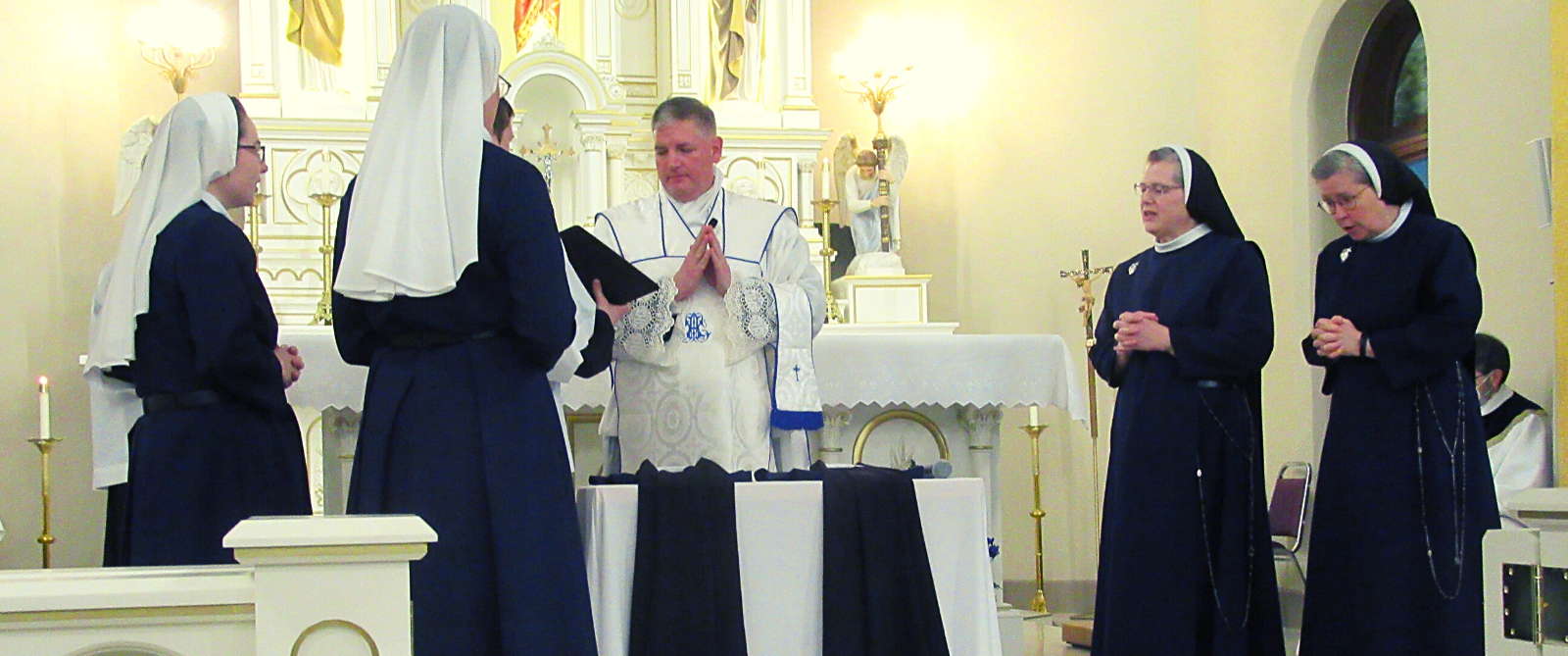
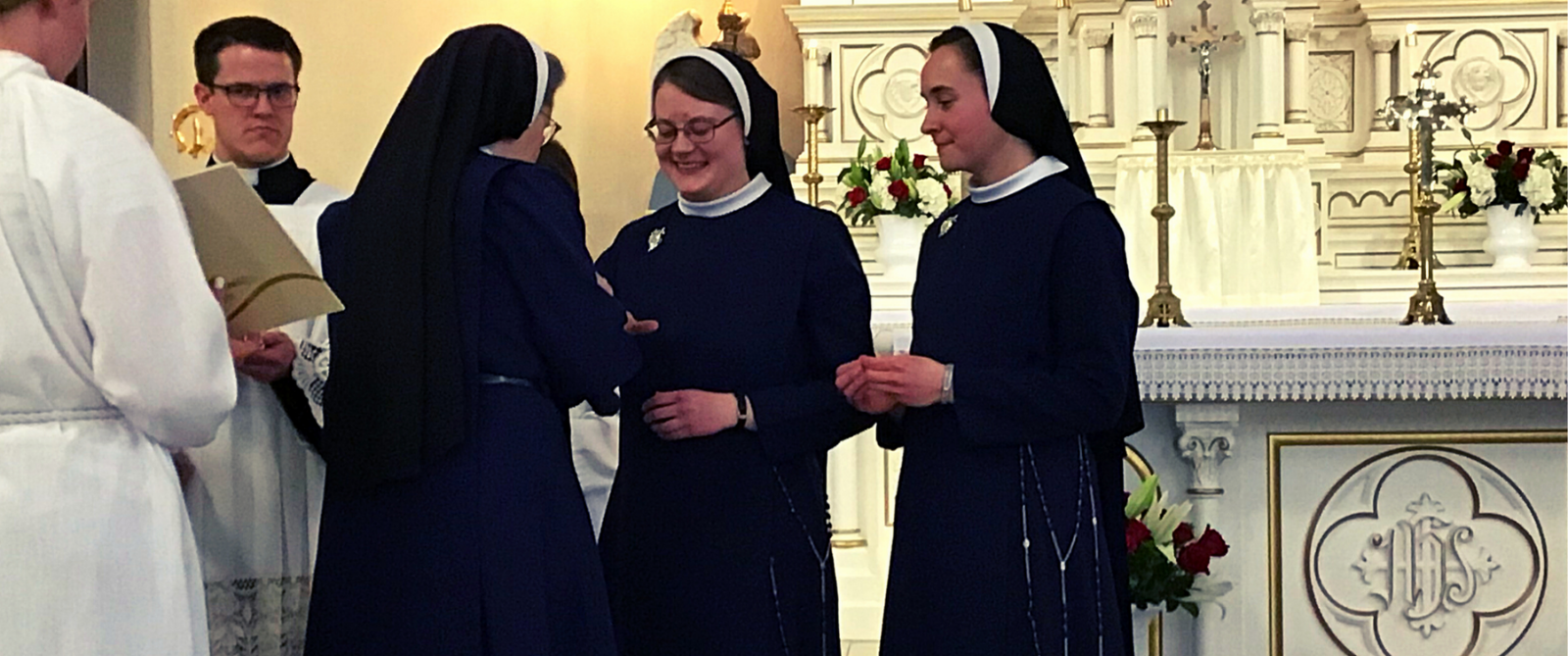
A young woman, who answers God’s call to become a Bride of Christ, may not receive a proposal that is audible or physically tangible, yet it is as real as any marriage proposal. Jesus invites her into a relationship of special intimacy that entails a total gift of self, a response of love to Love. On her wedding day, a bride professes her marriage vows. Similarly, when a young woman professes the vows of chastity, poverty, and obedience, she becomes a Bride of Christ and witnesses to a preferential love for the Lord. The vows are taken in imitation of Jesus who "loved with an undivided heart, universally and to the end" (Essential Elements, 15).
As the complete and unrestricted love of natural marital union is life giving, so too is the spiritual union between Jesus Christ and His bride. Considering this supernatural dimension, the Church teaches that "Perfect continence for love of the kingdom of heaven … [is] a singular source of spiritual fertility in the world" (LG, 42). A religious’ bridal relationship with Christ produces abundant fruit in the apostolate. In a general audience, Pope St. John Paul II stated that spiritual fruitfulness “…is shown in the work accomplished by many women religious in educating young people in the faith. It is well known that many female congregations were founded and have established numerous schools precisely to impart this education for which womanly qualities are valuable and indispensable…Dedication and compassion are the treasures of the feminine heart” (March 22, 1995).