

“St. Paul’s Gift of Sympathy”
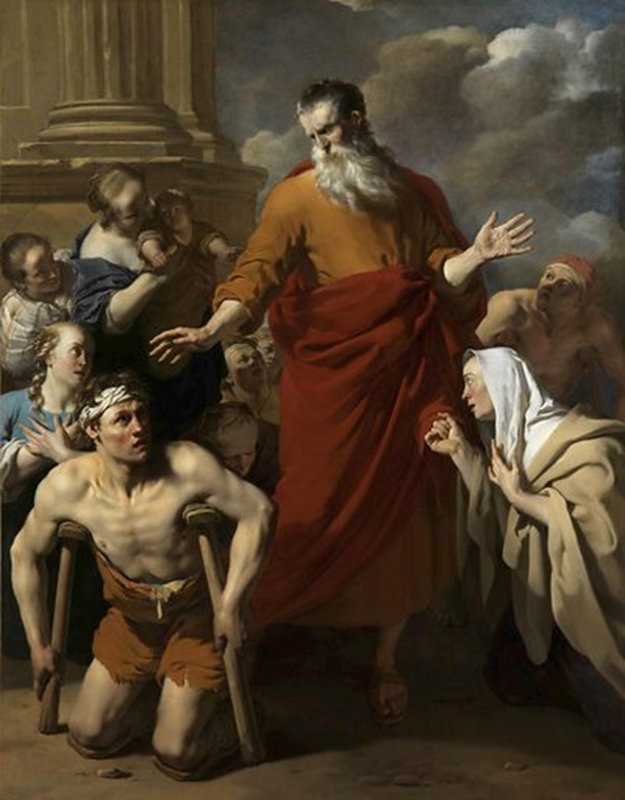
Image Credit (Public Domain)
Creator: Karel du Jardin, painter, Noord-Nederlands (1626–1678) | Credit: Rijksmuseum
“St. Paul’s Gift of Sympathy”
Heart Speaks to Heart – Cor ad Cor Loquitur
Sermon Reflection 6 for January 2026
by Sister Mary Catherine Blanding, IHM
https://www.newmanreader.org/works/occasions/sermon8.html
Before St. Paul taught the world, he learned how to love it
Introductory Reflection
Before we approach St. Paul as Apostle, preacher, and teacher of the nations, St. John Henry Newman asks us to pause and look more closely at the heart of the man himself. In this sermon, Newman presents Paul not as a distant or inimitable figure, but as profoundly human—formed by truth, yes, but also by sympathy, affection, and understanding of others. What follows is offered as a guided, prayerful reading, inviting reflection.
St. John Henry preached this Catholic sermon during Mass in the University of Ireland Church, 1857 during his mission to found a Catholic university. You can find it in print in Sermons Preached for Various Occasions or in the Newman Reader: St. Paul’s Gift of Sympathy
Helpful Vocabulary
- Septuagesima (from the Latin septuagesima, “seventieth”): the ninth Sunday before Easter, the third before Lent.
- Sexagesima (from sexagesima, “sixtieth”): the Sunday approximately 56 days before Easter.
- Apposite: fitting; appropriate.
- Egregie Doctor Paule: a brief office hymn traditionally assigned to the feast of St. Paul (c. 6th century). A traditional translation reads:
“Illustrious Teacher, Paul, fashion our lives aright, and carry off our hearts with yours to heaven.”
Questions to Aid in Reading the Sermon
Use these questions to guide a careful, attentive reading of the sermon.
108. Why is it not out of place, at this time of year (January), to reflect upon St. Paul?
109. What habit does St. John Henry tell us Paul possessed?
110. Why is being a priest a “personal humiliation,” according to Newman?
111. Why does St. John Henry quote from Paul’s apostolic labors in Greece? What point is he making?
112. What qualities does St. John Henry bring out in Paul?
113. How do the people of Ephesus, Tyre, and Caesarea relate to Paul?
114. How does Newman describe Paul in contrast to other teachers and rulers?
115. Newman points to two burning desires in Paul’s heart. What are they? What does St. Paul include in the joys of heaven?
117. What does Newman mean when he writes:“…how alive he is to slights, that at the same time most forgiving… how he is a pattern of the qualities of an advanced civilization…”
118. What does Paul mean when he would abhor “jealousies, enmities, divisions” as offenses against “that common nature which gives us one and all a right to the title of men”?
119. What did St. Philip Neri, St. John Henry’s patron saint, have in common with St. Paul? In what ways were they different?1
119–120. How did both Saints Paul and Philip Neri draw others to God? What did St. Paul primarily address, even though he was an inspired teacher of theological knowledge?
120. What quality does St. John Henry extol in both Philip Neri and Paul the Apostle?
Points to Ponder
These reflections invite deeper contemplation of Newman’s spiritual vision.
104–108. God as Divine Lover
St. John Henry begins his sermon by describing God as our Divine Lover:
“…none has so understood the human heart… as the Omniscient… He loved them with a father’s love, who does not cast off a worthless son once for all, but is affectionate towards his person, while he is indignant at his misconduct.”
Why do you think Newman begins this way when the sermon’s focus is St. Paul? Do we see this perception of God among practicing Catholics? Among those who have fallen away? What other images of God are common today?
Newman seems to employ a kind of “love logic”, beginning with the Father’s love and offering what feels like a diagram. What is this diagram, and why does he present it?
The Saints and Human Nature
107. What knowledge of human nature do saints possess? How does Newman distinguish this from Christ’s knowledge?
Paul’s Humanity
114. Many view St. Paul as an inimitable “super-saint.” Newman deliberately presents a different picture, emphasizing Paul’s humanity and compassion. Why does he stress that Paul was “the least magisterial of teachers”?
Grace and Nature
The newest Church Doctor writes that in Paul, grace did not supersede nature but sanctified and elevated it. Paul sought the approval of others and made himself dependent on his brothers. How might we live this out today, particularly in evangelization?
119. Paul and Philip Neri
St. John Henry compares St. Paul to his beloved St. Philip Neri:
“He, who is recorded never to have said ‘I command’ but once… guided his children by his voice and eye… gentle on the pinnacle of the sublimest power, cheerful after ten thousand disappointments… affectionate and sweet-tempered amid the trials of old age.”
What similarities does Newman see between these two saints? Why is he so drawn to this likeness?
Doctor Gentium
Though Paul is the Doctor of the Gentiles, Newman insists that the chief exercise of his apostolic office lay in forming character and shaping the heart, echoing the ancient hymn:
Egregie Doctor Paule, mores instrue,
Et nostra tecum pectora in cœlum trahe.
Is this a gentle exhortation for those engaged in evangelization or education today?
Newman’s Own Life
We may assume St. John Henry found in Paul his own modus operandi. Pope Benedict XVI noted in 2010 that Newman lived this profoundly human vision of priestly ministry through devoted care for the people of Birmingham—visiting the sick and poor, comforting the bereaved, and caring for prisoners. How does this illuminate Newman’s reading of Paul?
Truth and Tenderness
How can we, like Paul and Newman, be both strong in truth and deeply compassionate toward individuals?
A Self-Portrait?
Is Newman’s depiction of St. Paul, in some sense, a self-portrait? Why or why not?
Language and Imagery
What phrases, metaphors, or images in the sermon do you find especially engaging?
Personal Reflection
These questions are offered for quiet prayer and self-examination.
- Do I desire St. Paul’s gift of charity toward others? If so, in what concrete ways can I live this, especially with those closest to me?
- For those outside the fold whom I hope may draw closer to the Faith, how might I practice St. Paul’s gift of sympathy?
Saints Paul, Philip Neri, and John Henry Newman — pray for us.
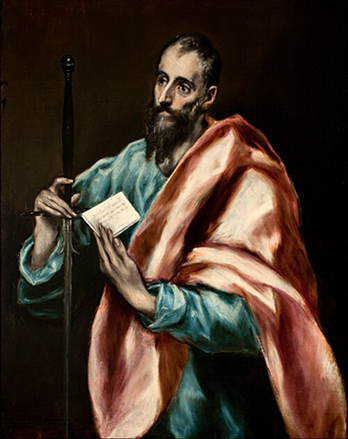
Image: Apostle St. Paul by El Greco (c. 1610–1614), public domain.