

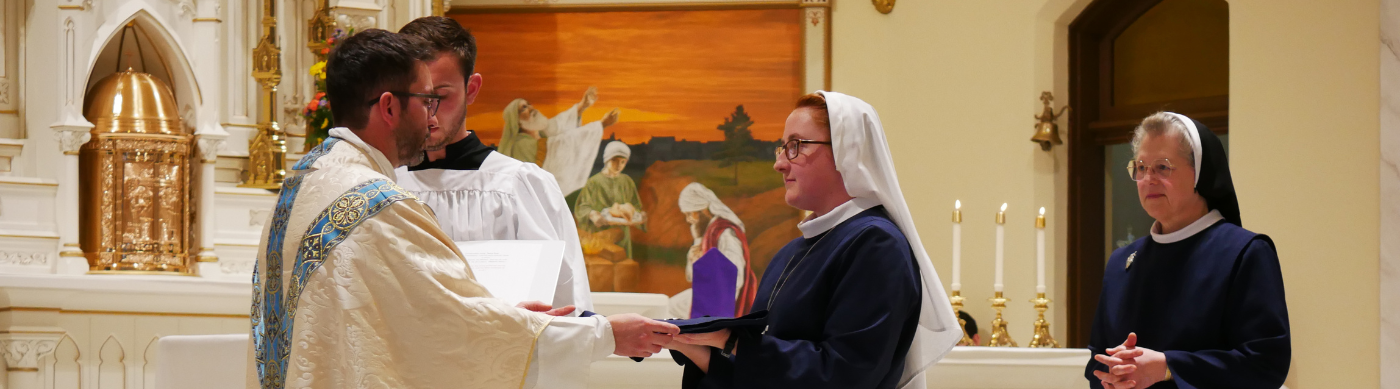
“Fasting, A Source of Trial”
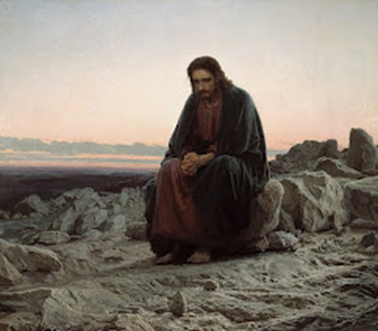
Image Credit: (public domain) Christ in the Wilderness, Ivan Kramskoy (1872)
“Fasting, A Source of Trial”
Heart Speaks to Heart – Cor ad Cor Loquitur
Sermon Reflection 7 for February 2026
by Sister Mary Catherine Blanding, IHM
https://www.newmanreader.org/works/parochial/volume6/sermon1.html
Teaser: What if fasting is not primarily about discipline or self-improvement, but about entering Christ’s own struggle in the wilderness?
In this Lenten reflection, the young Anglican preacher John Henry Newman presents fasting as a participation in Jesus’ forty days of trial—a practice that draws Christians into deeper union with Christ and into the reality of spiritual battle. Far from being merely ascetical, fasting becomes a path of companionship with Christ, hidden strength, and grace-filled endurance.
Overview
A Lenten reflection on fasting as participation in Christ’s temptation, trial, and victory.
Sermon Synopsis
On the First Sunday of Lent, March 4, 1838, the young Anglican preacher John Henry Newman preached on the meaning of fasting. As part of the Oxford Movement, he encouraged Christians to take their faith seriously by embracing the ancient practices of the Church.
Newman teaches that fasting is not simply about self-denial or moral improvement. Instead, it unites us with Jesus in His forty days in the wilderness. Through prayer and fasting, we share in Christ’s struggle against temptation and grow stronger in spiritual battle. These practices help us unite with Him and overpower the devil.
Reading Helps
(Numbers refer to note numbers in the sermon.)
1–2. We begin Lenten penance with Christ, through whom alone we can do any good. Without Him, we can do nothing.
2. The “prayer, fasting, and alms” of the Law before Christ were miserable without His grace and presence, as St. Paul teaches.
3. Christians have the better part: we fast with Christ, as members of His Body.
4. Like our Lord, we need prayer and some solitude, as our state of life allows; He gives the example. (Lk 6:12; Mt 4:22; Mk 1:35)
5. St. Paul lists “watches” among sufferings and links them with fasting. St. Peter prayed and fasted, as did Moses (Deut 9:18), Elijah (1 Kings 19:8), and Daniel (Dan 9:3; 10:2–3).
6. Fasting seems to strengthen some in virtue, yet appears to make others weak; one may seem ill-tempered when he is not.
7. Fasting can bring loss of self-control, agitation, fixation on wrong thoughts, difficulty in prayer, and attraction to sloth. It invites temptation. Even Jesus experienced temptation—without sin.
8. Holy men and women fasted, endured grave temptations, and did not consent. Thus they united themselves more closely to Jesus, who was tempted yet did not sin (Desert Fathers and Mothers).
9. Fasting engages us with both the power of heaven and the power of hell.
10. Christians engaged in spiritual warfare, conscious of sin yet children of God, practice fruitful repentance: “Christ’s soldiers, sword in hand.” Christ victoriously overcame His three temptations. Prayer and fasting overcome demons (Mk 9:29).
11. Prayer and fasting are God’s instruments, giving the Christian “royal power,” deliverance from evil, and victory over the evil one. Cf. the importunate widow—perseverance.
12. Jacob, Moses, and Daniel prayed and fasted long; the fruit:
Jacob—strength with God and men (Gen 32:28).
Moses—saving the Chosen People (Deut 9:25–26).
Daniel—intercession and prophecy (Dan 10:12).
13. Angels assist us in trial, as they aided Jesus and other biblical figures.
14. Evil spirits tremble before true Christians. Sin alone gives the enemy power.
Questions to Ponder
These questions invite a slower, prayerful reading of the sermon and its implications for our own Lenten practice.
(Numbers refer to note numbers in the sermon.)
1–2. If we do penance without Jesus, what follows? Why?
2. Why is penance without Christ “miserable and without hope”? How do worldly people view penance? Is this false? Why?
3. Newman speaks of mystically reiterating Christ’s earthly life in us—He being all in all, we having no power in ourselves (like water in Baptism). Comment. Do Catholics generally see Lent this way? Evidence?
3. Does Newman imply belief in Christ’s Eucharistic Presence when he writes “the bread and wine in Holy Communion”? Your thoughts?
4. St. JHN identifies prayer as self-chastisement: is prayer not our comfort and stronghold? Why self-denial?
4. Newman says Christ’s example comforts and encourages us in Lent. Many do not associate Lent with comfort. What does he mean for ordinary Christians?
5. Why did Jesus “expose Himself to temptation by prayer and fasting”? Is this paradoxical?
6–7. Explain: fasting “makes him seem out of temper when he is not…sharp when he is not,” and misunderstood. The paradox? The morality of being ‘ill-tempered due to weakness’?
7. If fasting brings sloth, agitation, and temptation, why fast? Many avoid fasting for this reason.
8. Unwelcome thoughts humiliate us. Why does Newman say “let it not distress Christians”? What good comes from this?
9. Christ’s temptation comforts us when Satan’s thoughts mingle with ours. How? Do many view fasting this way? Did you before reading this sermon?
10. Is it unrealistic that, while abasing ourselves, we make devils tremble? Or is this true spiritual warfare?
10–11. “This kind comes forth by prayer and fasting…such exercises give the soul power over the unseen world.” Reflect in light of 2026.
11. How would you explain the value of prayer and fasting (per #11) to a more modernistic Catholic?
12. Jacob, Moses, Daniel—pre-Christ, under the Law. Why highlight them? What makes them mystics and models for us?
13. Angels aid us. Why do we neglect them? The Fathers, Doctors (notably Aquinas), and the Church teach their reality and liturgical presence. Why is reflection on angels a comfort in Lent and beyond?
14. Newman says we frighten the devil, not vice versa. Your thoughts? Does this align with Ignatius of Loyola’s First Rules?
Rule 12 and explanation: https://spiritualdirection.com/2024/10/22/rules-of-discernment-a-practical-guide-rule-12
Personal Reflection Questions
1. What are your present thoughts on fasting? Has this sermon changed them?
2. How do you view Jesus’ fasting? Do you see yourself united to Him, despite the lesser quality of your fasting?
3. What do your weaknesses in fasting teach you? How might they sanctify you?
4. Is there a person or situation for which you wish to engage in spiritual warfare this Lent? Christ promises power over demons.
Helpful Sources
https://www.newmanreview.org/unlearning-ourselves-in-lent-newman-on-fasting/
https://www.catholic.com/magazine/online-edition/hate-fasting-try-fasting-more
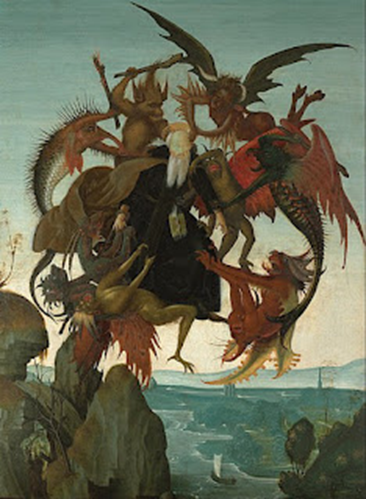
Image Credit: (public domain): The Temptation of Saint Anthony, 1487–88, by the young Michelangelo, copying Martin Schongauer's engraving