


“The Tears of Christ at the Tomb of Lazarus”
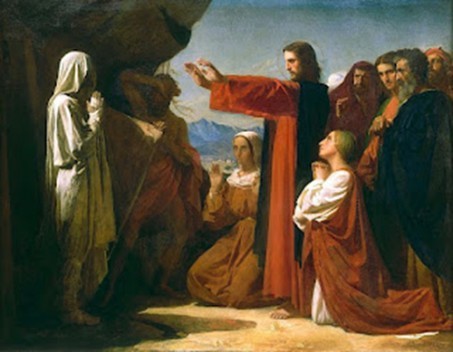
Image Credit (Public Domain): Rembrandt's Raising of Lazarus, 1630–1631
“The Tears of Christ at the Tomb of Lazarus”
Heart Speaks to Heart, Cor ad Cor Loquitur
Sermon Reflection 1 for March, 2025
by Sister Mary Catherine Blanding, IHM
He will never put upon us more than we can bear.
-St. John Henry Newman
Sermon Synopsis: In this sermon, St. John Henry writes about “Jesus wept,” the shortest statement in the Gospels. If you go to Mass hopefully on April 6, the fifth Sunday of Lent, you will hear these two word and more in this Gospel, Jn 11: 1-45.
St. John Henry explores why Jesus cried, and what His tears meant as a Divine person and with His human nature. Our Saint then comforts us; as Jesus consoled Mary and Martha and raised Lazarus, so as we suffer illness and death or see our loved ones suffer and die, He will be with us: Wherever there is a heart to answer, "Lord, I believe," there Christ is present. Blessed be his name! Nothing can rob us of this consolation: we will be as certain, through His grace, that He is standing over us in love, as though we saw Him. We will not, after our experience of Lazarus's history, doubt an instant that He is thoughtful about us.
Sermon Reading Guide (Note numbers are in both Newman Reader and books) The sermon note number is listed after the question number. (To assess Newman Reader, either type in sermon name and scroll to find Reader, or type Newman Reader and sermon title.)
- (128) What do you think when you read 'Jesus wept'? What caution does St. John Henry Newman give us when asking why Jesus cried?" (St. John Henry’s abbreviation: StJHN)
- (129) "What do you think are the main themes in this Gospel passage? (Jn 11:1-45)129 "insuperable" means “impossible to overcome.”(Oxford Language Dictionary)
- (129) How do we see both Jesus’ human nature and His divine nature in this passage? What examples does StJHN give of these moments where Jesus' humanity and divinity are in tension? 131 "How do the examples St. JHN give help us understand who Jesus is?
- (130?) How does St. JHN describe past attitudes toward Jesus, and how might his observations apply today?"
- (131) "How do the examples St. JHN gives help us understand who Jesus is?
- (131) What warning does StJHN give about how people might misunderstand or misrepresent Jesus? What dangers does he want us to avoid?
- (131) "What do you think St. JHN means when he says we should work on improving ourselves with God's help? Why do you think this is important for us?
- (132) What is the leading question StJHN raises in this sermon? How does it shape our understanding of Christ’s mission?
- (133) According to StJHN, why did Jesus weep? Beyond His sorrow for Lazarus, what deeper reasons does Newman suggest for His tears?
- (134) What universal question does Martha ask Jesus? Why is this question timeless, and how does Christ’s response provide hope?
- (135) StJHN draws a parallel between Jesus and Joseph from the Old Testament. How does this comparison help us understand why Christ wept?
- (136) StJHN compares Jesus to a parent hovering over an infant. What does this imagery 13? 136 In section 4 of the sermon, StJHN speaks of “other thoughts still to call forth His tears.” What are these thoughts?
- (137) StJHN describes Jesus seeing “the appearance of things reversed” shortly. What does this mean? What did Christ foresee?
- (137-138) According to StJHN’s reflections, why does Jesus say to Martha, “I am the Resurrection and the Life... He that believes in Me shall never die”? How does this declaration connect to the reasons for His tears?
Points to Ponder
- Emphasizing Mystery over Rationalism (1st par, 128)
St. John Henry Newman exhorts his parishioners, living amidst rationalism, (the overstress of reason and under stress of faith) to revere the mystery: “We should ever remember that the thoughts of our Savior’s mind are far beyond our comprehension.”
- How does this tension between reason and faith play out in today’s Church?
- Do you struggle with overanalyzing faith rather than embracing mystery?
- “Feed, live, grow…” and the Church today (130)
- What does Newman mean when he exhorts us to ‘feed, live, grow’ spiritually?
- How does this apply to the Church today, especially regarding the dangers of rationalism and the need to savor mystery?
- Walking, speaking, and crying with Our Lord (130, 2nd par.)
We need to see our Great Lover with us, speaking, walking & crying. writes one commentator.
- How does SJHN help us speak, walk & cry with Our Lord?
- Christ’s tears vs. our tears
- How do Christ’s tears at Lazarus’ tomb differ from the supernatural gift of tears we may receive as sorrow for sin?
- How does this relate to Newman’s exhortation to work on improving ourselves with God's help?
- The Meaning of Weeping
- Jesus wept—what does this tell us about the place of tears in our own lives? Are tears a sign of weakness or strength in faith?
- "Where is God in the midst of this tragedy?" (# 3, 135-136)
- If you had been here, my brother would not have died.’ This tender complaint echoes throughout time….”Where is God in the midst of this tragedy…” What is Newman’s response? Yours?
- How does this relate to Newman’s exhortation to work on improving ourselves with God's help?
- Jesus’ grief for Lazarus vs. the Agony in the Garden (#2, 134)
- Compare Jesus’ grief, as speculated by St JHN (#2, 134) to His grief in the Agony.
- Jesus’ lack of a human confidante (#3, 132)
- Newman speculates that Jesus, unlike us, had no human confidante for His heart’s deepest affections. How do you interpret this? Do you think Jesus experienced human loneliness? Why or why not?
- Jesus mourning His own impending death (#3, 133)
- John Henry suggests that Jesus not only mourned Lazarus but also His own coming death. What does this reveal about His human and divine nature?
- Jesus’ presence in suffering (138, last par.)
- How does Newman’s reflection reassure us that Christ is with us in suffering, just as He was with Mary, Martha, and Lazarus?
Personal Reflection Questions
- Think about a time you lost someone you loved. How can the words of St. John Henry comfort you in facing future losses?
- How can faith in Jesus help us face our fear of death? Take a moment to pray, asking God to increase your trust in Him.
- "How can you show love and comfort to someone who's grieving, just like Jesus did with Mary and Martha?"
- If Jesus cried, what does that tell us about the value of our own tears? How do you feel about crying in front of others? What might the Holy Spirit be revealing to you about the gift of tears?
- A How do you personally "walk, speak, and cry" with Christ in your life?
- After reading the sermon and reflecting on these questions, how has your understanding of Jesus' weeping at Lazarus' tomb deepened? What insights from StJHN’s sermon will stay with you as you continue your Lenten journey?
Sts. Martha, Mary & Lazarus, pray for us.
St. John Henry, pray for us.
Immaculate Heart of Mary, pray for us.
Jesus Christ Crucified, have mercy on us.

Image Credit (Public Domain): The Raising of Lazarus, 1857, Léon Joseph Florentin Bonnat