

Meditation:
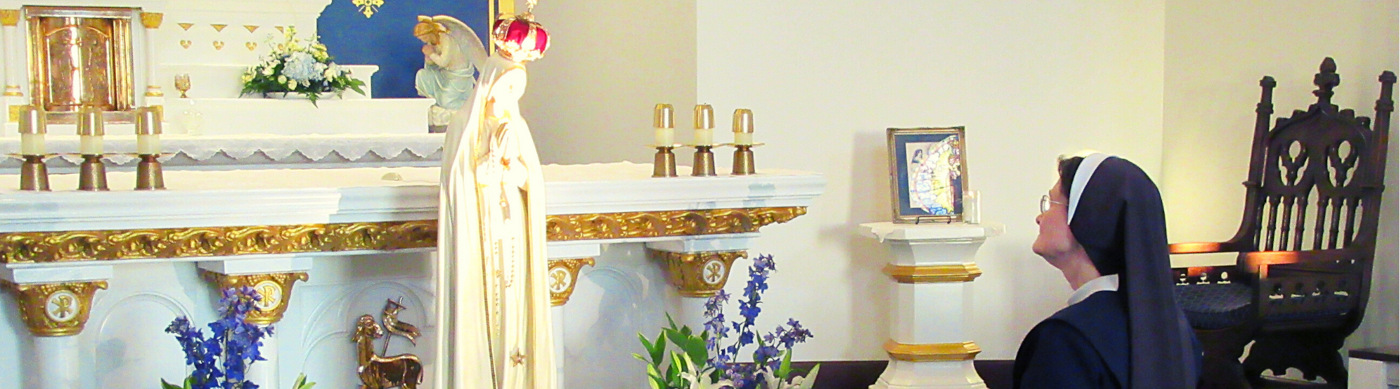
We would find it difficult to not have a picture of a loved one accessible to us, especially if that person is separated from us by distance. The image calls the person to mind and helps us to connect to him or her, though time and space keep us far apart. If these pictures were destroyed in a house fire, we would be devastated; if someone purposely destroyed them we would be outraged. This is the attitude Christians have when images of our Lady are destroyed and desecrated. Mary is our mother and we find great comfort in her image for it reminds us what Jesus promised us from the cross; she is a mother who loves us and watches over us. Our fifth Saturday is directed to making reparation for those who insult her directly in her sacred images. We seek to console the heart of Mary wounded by such hatred of her image and to draw these people into the love of a Mother’s heart.
When God created the physical order, He declared it “good”; when He created man, male and female, He called them “very good.” After sin entered the world, creation did not lose its goodness; however, it did become distorted. When we view creation, we do not see it with the clear vision God wishes us to have towards it. When Christ came to redeem humanity, He took on our human nature in the incarnation; He came as one of us to lead us back to the Father. He shows us how to be human, how to treat creation. In His Resurrection and Ascension, He shows us what He has planned for redeemed humanity: a glorified body in Heaven. The body is good, created reality is good. The Old Testament prescriptions against making certain images were a result of fallen man’s tendency to idolize what he sees; not all images in the Old Testament were banned. As Christians we understand how images can lead us to honor our Savior who died for our sins and to revere His Mother who was a most obedient disciple. As we reflect upon our Lord risen and ascended into heaven, we praise Him for not setting aside His glorified body when he returned to the Father; every time we see a crucifix or an image of the Sacred Heart we are reminded of the goodness of our bodies, of creation. Christ has revealed this to us by taking on our human nature and taking that human nature with Him into heaven.
When the Holy Spirit descended upon Mary and the apostles in the upper room, the early Church knew the importance of taking the Gospel to the ends of the earth. The faith was spread by word of mouth and the living example of the Apostles who had spent time with Jesus. After Jesus’ Ascension into Heaven, this faith continued to be encouraged and nurtured by the Blessed Virgin Mary. It was she who the Apostles gathered around during those uncertain days before the descent of the Holy Spirit, and she supported with a mother’s heart the early missionary work of the Apostles. The Apostles knew that they had Mary to help and encourage them on earth. John took care of Mary in Ephesus and, it is imagined, that Mary was present at the Council of Jerusalem when all of the Apostles gathered together to decide important matters for the nascent Church. As time went on, the early Christians faced persecution and had to go into hiding; they continued to express their faith as they were able. In the Catacomb of the cemetery of St. Priscilla, this faith was expressed in one of the earliest images of our Lady where she is holding Jesus on her lap. Pope John Paul II said, “In order to communicate the message entrusted her by Christ, the Church needs art!” The faithful need a way to express their love and devotion to God, our Blessed Mother and the Saints; also, it is a good reminder to us of the heavenly realities before us that we do not always see. Some people think that having religious images dishonors God but in reality He has made us with a connection to the physical world; He has even redeemed us by taking on a physical body. There is nothing wrong with using the things of creation to come back to Him. In response to the iconoclast heresy from the first millennium, the 2nd Council of Nicaea decreed that venerating images was good and destroying images was a sin. Let us follow holy Mother Church’s counsel and protect these sacred images and seek to make reparation for those who would harm them.
At the conclusion of her earthly life, Mary was taken up to Heaven body and soul. She is the eschatological icon of the Church; where she is we hope to one day be. We long to be with our Mother who has been crowned queen of Heaven and earth. She has reminded us frequently of her care and protection of us, especially when she comes to visit her children. One time in particular was at Guadalupe, Mary said, “Am I not here, I who am your mother?" In addition to speaking these comforting words to Juan Diego, she left her image on his tilma, one that has been miraculously preserved for nearly 500 years. This image shows a mother’s care and concern for she came as the native people. In the image, she expresses the truths of the faith and seeks to teach to all people the love God has for each of them. As we look at this image and other images of our Lady we cannot deny that she desires to draw us to her Son. These images help us to draw closer to Jesus, Mary and the Saints. Let us pray for those who do not see Mary as their Queen and Mother and seek to destroy her image in the world; let us make reparation for these souls who turn away from a Mother’s love.